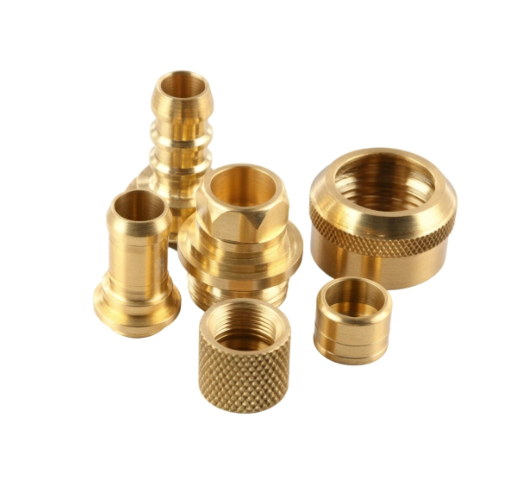

A pin, bushing, threaded insert, spacer, or miniature fitting may represent little of an assembly’s purchase cost. Its failure can still stop installation, create leakage, disturb alignment, or delay production. This is why screw machine parts should not be sourced by unit price and drawing size alone. Their risk is shaped by functional relationships, thread condition, hidden burrs, batch consistency, inspection, and handling. These factors become more important as a project moves from samples to recurring production. A production-risk review should begin with what the component does, then work backward through geometry, process selection, verification, traceability, and packaging.
Purchase Price Does Not Measure Assembly Risk
Small turned components look familiar and use little material, but the impact of failure is not proportional to size.
A useful way to frame the decision is:
Part risk = functional importance × failure exposure × replacement difficulty
This is a review method, not a numerical formula. A locating pin installed deep inside a product may deserve more control than a larger, easily replaced cover.
Procurement teams should therefore ask three questions before comparing prices:
- What happens if the component does not fit?
- At what stage will the problem be discovered?
- How difficult is replacement after assembly has begun?
The answers determine the required level of validation and inspection.
Begin with What the Component Does Inside the Assembly
The same shape can locate, fasten, seal, guide motion, transfer load, or control flow. Each function creates different critical characteristics.
Four Functional Roles Hidden Inside Small Turned Parts
Most small precision components perform one or more of these roles:
- Locating: A pin, sleeve, or shoulder establishes the position between mating parts.
- Fastening: A thread or retention feature maintains clamp load or connection.
- Sealing: A diameter, face, groove, or tapered area controls leakage.
- Motion transfer: A shaft, plunger, or valve feature transmits rotation or linear movement.
Once the role is known, the drawing can prioritise features. Locating parts may depend on diameter and shoulder position; sealing parts on surface condition; threaded inserts on entry geometry and engagement length.
The Critical Feature Is Not Always the Tightest Dimension
The smallest tolerance is not automatically the most important. A wider dimension may control assembly clearance, while a tight non-functional feature has little effect.
The review should connect every critical requirement to a consequence:
- Outside diameter → fit or guidance.
- Shoulder location → axial positioning.
- Thread start → engagement and installation.
- Small bore → flow or passage.
- End face → sealing or load transfer.
- Cross-hole position → connection or timing.
Geometry Reveals Whether Screw Machining Is a Natural Fit
Screw machining is not limited to conventional screws. The term covers the production of many rotational components from bar stock, including pins, bushings, spacers, threaded inserts, valve elements, connector bodies, fittings, locating studs, and sensor hardware.
The process deserves consideration when a drawing combines:
- Several coaxial diameters and shoulders.
- Internal or external threads.
- Axial drilling or boring.
- Flats, slots, or radial holes.
- Front and back features that must remain related.
- Limited gripping area after part-off.
- Quantities that are expected to repeat.
For suitable precision screw machined parts, bar stock supports consistent loading and a logical turning, drilling, threading, and cut-off sequence. Integrated radial operations may reduce transfers.
Material behaviour, bar condition, feature access, quantity, and inspection capability must also be reviewed.
A Passing Diameter Does Not Guarantee a Working Component
A component can satisfy every size limit and still fail because feature relationships—not isolated diameters—control assembly.
Consider this functional chain:
Primary datum → functional diameter → shoulder → thread → mating component
Independent measurements from convenient surfaces may not reflect assembly. A radial hole can be correctly sized but misplaced, or a thread can pass a gauge yet begin too far from a locating shoulder.
For custom turned parts, manufacturing and inspection datums should follow the functional chain. Related features may need one setup; transferred features need a defined way to restore the original datum.
Burrs, Threads, and Small Holes Create Disproportionate Risk
Burrs occupy more functional space as parts shrink. They can restrict a passage, prevent insertion, damage a seal, or release contamination.
Burrs Can Become Functional Obstructions
Effective burr control begins with tool exit direction, intersecting holes, thread entrances, and inaccessible areas. Drawings should distinguish three edge conditions:
- The edge must remain functionally sharp.
- The edge requires a controlled break or radius.
- The edge must be burr-free, with minor rounding permitted.
A universal “break all edges” note may be insufficient.
Thread Inspection Must Reflect Assembly Function
Thread verification should extend beyond nominal size:
- Thread direction, pitch, and class.
- Effective engagement length.
- Entry chamfer and first-thread condition.
- Distance from the thread to a shoulder or sealing face.
- Burrs or chips trapped at the entrance.
- Functional gauging or mating-part evaluation
This matters especially for automatically installed threaded components.
Prototype Success Does Not Prove Production Readiness
A conforming sample proves the geometry can be made, not that repeat orders will remain stable.
Prototype production may rely on:
- General-purpose equipment.
- Manual loading and close operator attention.
- Flexible tools and fixtures.
- Frequent adjustment.
- Extensive inspection of individual parts.
Recurring production requires bar-fed machining, controlled tool life, planned sampling, material-lot management, repeatable cleaning, and standardised packaging. Suppliers should disclose route changes and characteristics requiring revalidation.
Volume Changes the Correct Manufacturing Route
As demand grows, recurring orders may justify continuous bar feeding, integrated radial operations, dedicated tooling, or revised inspection.
The question is whether the new route protects approved functional relationships. Changes affecting datums, burr direction, surfaces, or measurement should trigger controlled first-article review.
When a programme requires stable replenishment rather than a one-time sample, sourcing custom screw machine parts for recurring production should involve a review of bar-stock control, feature integration, inspection frequency, burr management, traceability, and packaging.
Supplier Evidence Matters More Than Machine-List Marketing
An equipment list does not show how a drawing will be controlled. Machining supplier evaluation should examine the proposed process, not broad precision claims.
Useful evidence includes:
- A DFM review tied to the submitted drawing.
- Identification of the operation establishing the main datum.
- A clear setup and feature sequence.
- Tool-wear monitoring for critical dimensions.
- A defined method for cross-hole and thread deburring.
- First-article and production inspection plans.
- Material traceability appropriate to the order.
- Change-control communication.
- Packaging designed for the component’s geometry.
For production part qualification, buyers should confirm that inspection methods remain consistent. Changing a datum, gauge, or fixture makes batches difficult to compare.
Packaging Is Part of the Manufacturing Process
Finished screw machine parts can pass inspection yet arrive unsuitable. Bulk contact can dent shoulders, damage threads, or bend slender features. Mixed revisions create traceability problems.
Risk-based options include counted bags, divided trays, thread protection, batch labels, and separation between revisions. Cleaning must address chips, oil, or debris that could affect assembly.
Production ends when verified components reach the customer ready for efficient receiving and use.
A Production-Risk Checklist Before Releasing the Order
Before approving recurring screw machine parts, engineering and procurement teams should confirm:
- What function does the component perform?
- Which feature controls fit, location, sealing, or motion?
- Which dimensions must remain related?
- Where could burrs interfere with function?
- How will threads be verified?
- Will samples and production use the same process?
- What changes when order quantity increases?
- How are critical dimensions monitored during production?
- Is material and batch traceability required?
- How will parts be cleaned, separated, and packaged?
- How will manufacturing changes be approved?
- Can the replenishment plan support the customer’s schedule?
Small Components Should Be Sourced by Consequence, Not Price Alone
The importance of a turned component is determined by what happens when it fails, not by its price. Reliable screw machine parts begin with assembly function, then suitable bar stock, datum planning, feature integration, burr and thread control, inspection, traceability, and packaging. A prototype is only the first checkpoint; recurring production must demonstrate repeatability and controlled change. For a useful review, provide the 2D drawing, 3D model, material, critical relationships, batch quantity, annual forecast, inspection expectations, and assembly context. Suppliers can then design around production consequence and continuity rather than quote an isolated piece of metal.