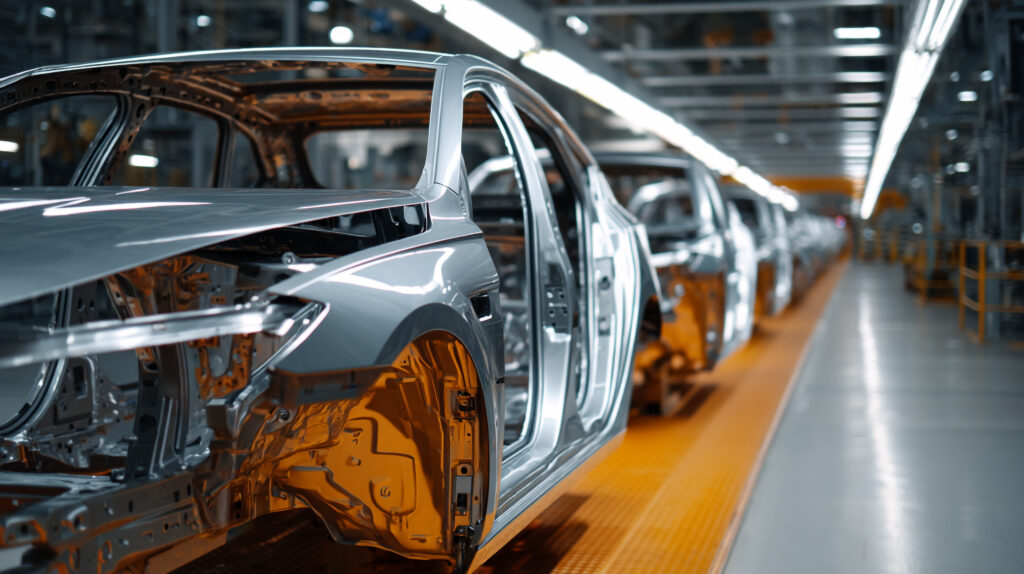

In automotive manufacturing, quality control is critical to ensuring that vehicles meet safety, performance, and aesthetic standards. One of the key stages in this process is the body in white (BIW) inspection, where the vehicle’s frame is evaluated before painting and assembly. This inspection focuses on the structural integrity, alignment, and dimensional accuracy of the vehicle body. Manufacturers today have the option to choose between automated and manual body in white inspection methods, each with its own advantages and drawbacks. Understanding the pros and cons of both approaches helps automotive companies optimize production, reduce defects, and maintain high standards of quality.
Body in white inspection is essential because any misalignment, welding defect, or dimensional discrepancy can affect vehicle safety, handling, and overall fit and finish. Whether inspecting using advanced automated systems or traditional manual methods, the goal is to detect issues early in the production process to prevent downstream problems. The choice between automated and manual inspection depends on factors such as production volume, accuracy requirements, available technology, and workforce capabilities.
Manual Body in White Inspection: Pros and Cons
Manual body in white inspection relies on skilled technicians to visually examine the vehicle frame, measure dimensions, and identify defects. Inspectors use tools such as gauges, calipers, and templates to verify that components meet specifications.
One of the main advantages of manual inspection is its flexibility. Human inspectors can evaluate complex or unusual shapes, assess subtle cosmetic defects, and apply judgment in cases where automated systems might struggle. Manual inspections can also be more cost-effective for low-volume production lines or specialized vehicles, where the expense of automation may not be justified.
However, manual BIW inspection has notable disadvantages. It is time-consuming, which can slow down production, particularly in high-volume manufacturing. Human error is another concern; fatigue, inconsistent measurement techniques, or subjective judgment can result in overlooked defects. Additionally, manual inspection data may be harder to track, analyze, or integrate into digital quality management systems, limiting opportunities for predictive maintenance and continuous improvement.
Despite these challenges, manual inspection remains valuable in situations requiring expert judgment, handling irregular vehicle geometries, or performing spot checks on automated processes. Skilled technicians are often capable of identifying issues that automated systems may not easily detect.
Automated Body in White Inspection: Pros and Cons
Automated body in white inspection leverages technologies such as 3D laser scanning, machine vision, and robotic measurement systems to evaluate the vehicle frame. These systems capture precise data points, measure dimensions in real time, and detect deviations from design specifications with high accuracy.
The main advantage of automation is consistency and precision. Automated systems can measure every vehicle in the same manner, reducing variability caused by human factors. High-speed scanning allows for rapid inspection, making it ideal for high-volume production lines. Data collected from automated inspections can be easily stored, analyzed, and used for process improvement, providing actionable insights that support quality control and operational efficiency.
Automation also enhances safety, as it reduces the need for inspectors to work in close proximity to machinery or heavy vehicle components. Integration with digital manufacturing platforms allows for real-time alerts when defects are detected, enabling immediate corrective action and minimizing the production of nonconforming parts.
Despite these benefits, automated body in white inspection has some limitations. Initial setup costs are high, requiring investment in advanced equipment, software, and staff training. Automation may struggle with unique, highly customized vehicles or subtle cosmetic defects that require human judgment. Maintenance of the inspection equipment is also necessary to ensure long-term accuracy and reliability.
Automated inspection systems may require continuous calibration and periodic validation to ensure measurements remain precise. Without proper oversight, even sophisticated systems can miss anomalies that a skilled human eye would catch. Therefore, combining automated inspection with selective manual checks often yields the best results.
Choosing the Right Approach
Selecting between automated and manual BIW inspection depends on production requirements, budget, and quality expectations. High-volume manufacturers typically benefit from automation due to speed, repeatability, and integration with digital quality systems. Smaller or specialized production lines may rely on manual inspection to maintain flexibility and leverage human expertise.
Many automotive companies adopt a hybrid approach, using automated systems for broad dimensional checks and manual inspections for complex areas or cosmetic evaluations. This combination ensures that the precision and efficiency of automation are complemented by the adaptability and judgment of skilled technicians.
Strategically implementing both methods allows manufacturers to optimize throughput, reduce defects, and maintain high safety and quality standards. Real-time data from automated systems can guide manual inspections, focusing human attention on areas most likely to present issues. Over time, this synergy improves overall quality management and reduces the likelihood of recalls or rework.